
Introduction to meatless meats
Meatless meat, also known as meat substitute, faux meat, or meat analogue, is a vegan (Merriam-Webster, 2018) alternative food product to animal meats. It is a food which aims to have approximately the same taste, texture and appearance of similar foods made from meat.

The general purpose of meatless meat is to have a vegan product that acts in place of meat, by which a person can replace within their diet. The current main companies who are producing meat alternatives retain the motive that reliance on animals such as cows to make meat is “land-hungry, water-thirsty, and pollution-heavy”, boasting statistics that attribute 18 percent of global greenhouse gas emissions to livestock production (E. Oswald, 2017).
The main issues that are being addressed with this technology are agricultural, environmental and ethical. The aforementioned statistics detail a worldly agricultural and environmental issue, where livestock produce a large number of greenhouse gasses and require a significant portion of land and resources to keep stable.
Additionally, use of animal products can be seen as unethical by some (BBC, 2014), due to reasons such as treatment of the animals. This can act as a reason for a person to not consume meat products, thus, they usually look for meat alternatives.
The history
The earliest known mentioning of tofu as an alternative to meat appeared in China, 965BC, in “Qing yilu” (Anecdotes, Simple and Exotic) by T’ao Ku. This text details that when Shi Ji was the magistrate of Qing Yang, he discouraged the consumption of meat and instead promoted the sale of tofu (Soyinfo Center, 2014). More importantly, instead of calling it doufu (Chinese name for tofu), it was referred to as “mock lamb chops” or “the vice mayor’s mutton” (Translated by H.T. Huang, PhD, July 2002).
The history of meat alternatives began there and continued with the invention of “Protose”, patented by Dr J.H Kellogg in 1901. This “vegetable-food compound”(Soyinfo Center, 2014) made from grains and peanuts was analysed by The London Lancet in 1899, determining that it “chemically… presents the composition of animal tissue, beef or mutton”(Adam D. Shprintzen, 2012). A more significant leap in the technology of meatless meats included the first soy-based meat alternative, “Soy Bean Meat”, developed by Madison Foods (Soyinfo Center, 2014).
Fast forwarding to 1985, Marlow Foods began producing the well-known meat alternative “Quorn”. This faux meat was based on mycoprotein, a protein derived from fungi (mycoprotein, 2018) which has been the main ingredient in Quorn foods since its creation (Marlow Foods, 2017).
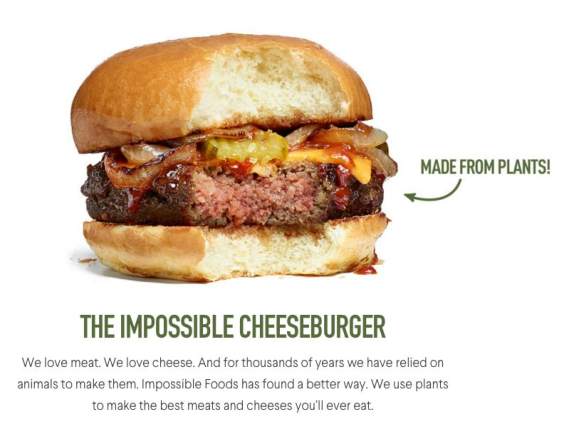
Research throughout the 21st century has now resulted in the more technical production of meatless meats. An example of this is seen with Impossible Foods, a Silicon Valley start-up company founded by P. O. Brown who has recently produced the, arguably, most accurate alternative to meat (Impossible Foods Inc, 2017).
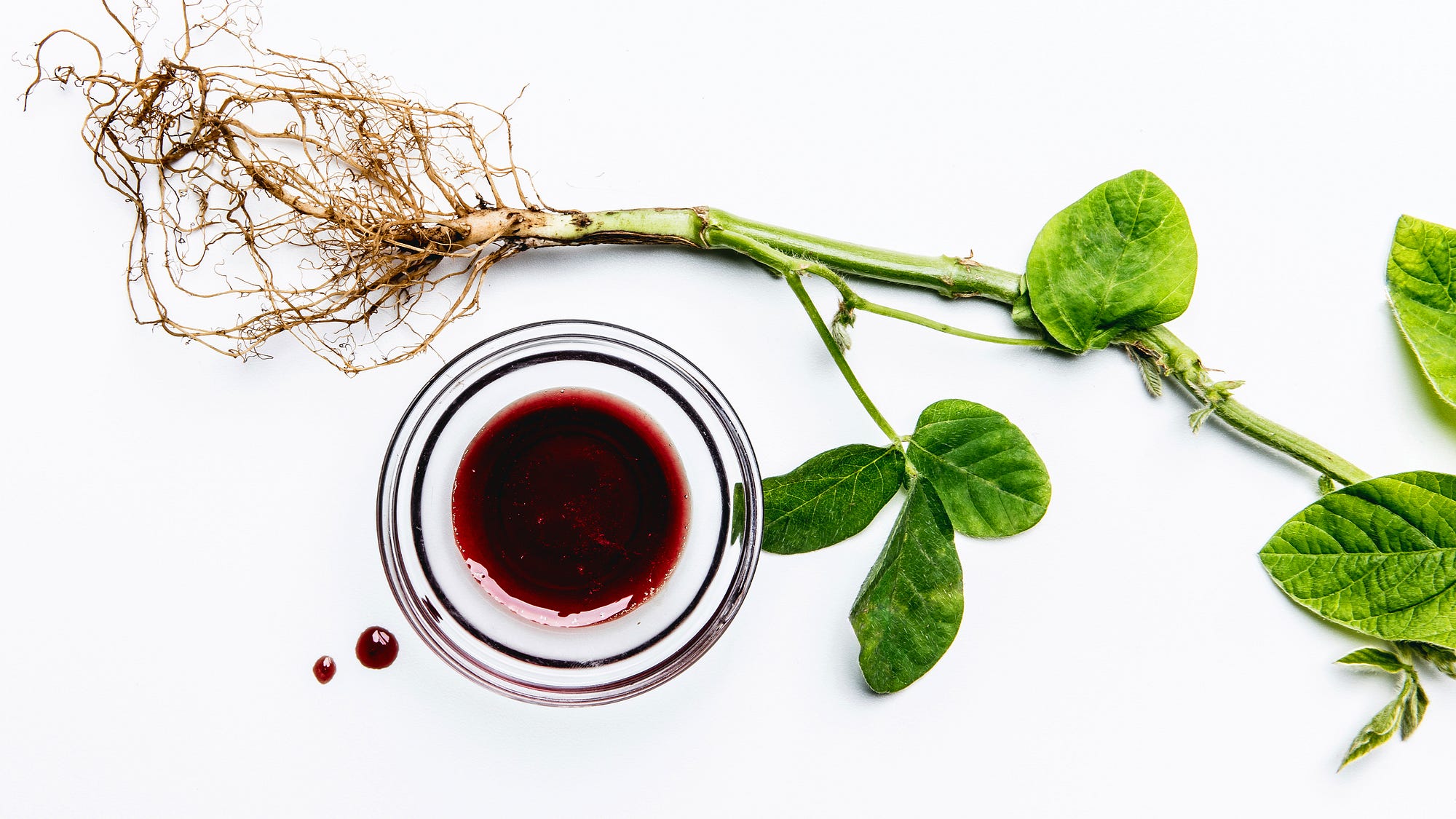
The component which makes their meatless product so closely related to real meat is haem. Haem is found in the protein haemoglobin, which is what makes blood red and gives it the ability to carry oxygen throughout the body. This molecule was found to be at very high levels within beef and plants. Thus, Impossible foods can utilize a molecule found in plants, alongside other vegetable products such as wheat protein and coconut oil (Impossible Foods Inc, 2017), to produce a burger which resembles meat on all senses.
The entire product that Impossible foods produce is created through wheat and potato protein, vitamins, amino acids, sugars, haem, soybeans, and coconut oil (Impossible Foods, 2017).
One feature that has not been present in meat alternatives in the past is texture (F. Wild, 2014). The texture of ground meat within the Impossible Burger is created through the use of textured wheat protein, improving on previous faux meat technologies and possibly creating a standard for future meat alternative products. This is potentially the most significant improvement from previous methods in the overall search for the most accurate meatless meat.
The impact
As the statistics of vegan consumers and interest in faux meats continue to rise every year, it is clear that this category of food is no longer a niche product. Thus, there is the possibility of significant impacts to specific communities, businesses, and society as a whole.
Firstly, there has already been a huge positive impact on businesses as the meat alternatives market builds. Both Richard Branson and fellow billionaire Bill Gates have invested in Memphis Meats (S. Ghosh, 2017), a company which produces meat in a different way; directly through animal cells. Although this is not exactly faux meat, its main purpose is to battle the global demand for meat that is projected in coming years and to provide meat in a more sustainable, healthy way (Memphis Meats, 2018).
Impossible Foods has halted the idea of producing their burgers for consumer purchasing, focusing more on enabling businesses such as cafes to provide this alternative meat source to their customers. This has granted a large source of income for the hundreds of businesses who are able to serve these burgers, as the desire for meat alternatives rises in the U.S.
Additionally, major U.S beef supplier Cargill has seen the potential in meatless meats and alternative meat products, selling their last few feed yards in the past couple years in replace to “explore plant-based protein” (Reuters, 2018).
However, there is the potential for businesses which encompass careers such as butchers and farmers to have a loss in sales due to a decrease in demand for traditional meat. Most activities associated with producing meat would be eliminated if meat alternatives became the new standard. As such, the many processes that go into meat products such as crop growing, livestock raising, and meat refinement will be obsolete, eliminating a huge sector of jobs. Additionally, Barry Carpenter, NAMI’s president and CEO, claims that they “provide millions of quality jobs in every state and every sector of the U.S economy” (SOSLAND PUBLISHING COMPANY, 2018), detailing the importance of jobs in the meat production field.
Although there is the potential for a negative impact on certain businesses, the effect of meatless meats in society is likely to be mostly positive. Both people who want to able to have more variety in their eating choices, and those who desire a cleaner environment will have their problems satisfied with meatless meats. This does not mean that people who prefer traditional meats will be at a loss for a choice of preference.
If there is to be enough meat to match the extrapolated demand in 2050, meatless meats will have to replace standard meat production (Dr T. E. Elam, 2006). Though there may be many impacts upon society, “once the alternative is just as good as the real thing” meatless meats will no longer be a niche (C. Brownell, 2016).
Disruptive or emergent?
Meat alternatives can be described as both an emerging and disruptive technology, as factors for both sides are apparent. Having said that, it would more accurately be defined as an emerging technology, as it is yet to cause its full case of disruption by replacing regular meat production and is still in the process of being developed.
Although consumption of meatless meats is currently a niche, having only 0.5 percent of the U.S adult population as vegans (Vegan Bits, 2018), the area is said to be growing and planning to become the standard. The demand for meatless meats is shown through both the significant 600% increase in people identifying as vegans in the U.S in the last three years (GlobalData, 2017), and the growth of veganism as a search topic; boasting an impressive increase from 2004 to 2018 (Google, 2018).
Evidence for the desire of replacing traditional meat can be seen in meatless meat developers such as Professor P. Brown, who says he is “making food for people who are comfortable eating meat and who want to continue eating meat” as he aims to reduce the human footprint on the plant “by 50 percent” (Jewish Vegetarian Society, 2012). This means that although its initial introduction may have been to give a consumer an alternative to meat, meatless meats have developed to fix issues created by meat production processes and ultimately, become a disruptive technology.
Reference list:
D. Shprintzen, 2012, American Vegetarian History: Vegetarian History Considered, retrieved 25/04/2018, <http://vegetarianhistory.blogspot.com.au/2010/06/welcome.html>.
BBC, 2014, Ethics – Animal Ethics: Eating Animals, retrieved 24/04/2018, <http://www.bbc.co.uk/ethics/animals/using/eating_1.shtml>.
Berkeley Engineering, 2015, Saving The Plant Sustainable Meat Alternatives, retrieved 27/04/2018, <http://scet.berkeley.edu/wp-content/uploads/CopyofFINALSavingThePlanetSustainableMeatAlternatives.pdf>.
Brownell, 2016, The end of meat? Economics, the environment and changing tastes have top protein feeling the heat, retrieved 24/07/2018, <http://business.financialpost.com/commodities/agriculture/the-end-of-meat-economics-the-environment-and-changing-tastes-have-top-protein-feeling-the-heat>.
Dr. T. E. Elam, 2006, CGFI: Projections of Global Meat Production 2050, retrieved 26/07/2018, <http://www.world-ostrich.org/download/demand/CGFI_%20Dr.%20Thomas%20E.%20Elam%20_%20Projections%20of%20Global%20Meat%20Production%202050.pdf>.
Oswald, 2017, The Future Of Food: Meat Alternatives, Plant-based Meat, retrieved 24/04/2018, <https://www.digitaltrends.com/features/the-future-of-food-meat-alternatives/>.
Wild, 2014, The evolution of a plant-based alternative to meat, retrieved 25/04/2018, <https://www.wur.nl/upload_mm/e/3/c/72826cba-6b00-4066-b3dd-7ca1546e92e4_LikeMeat%20Wild%2C%20Czerny%2C%20Janssen%20et%20al%20AgroFood%20Ind%202014.pdf>.
GlobalData, 2017, Top Trends in Prepared Foods 2017: Exploring trends in meat, fish and seafood; pasta, noodles and rice; prepared meals; savoury deli food; soup; and meat substitutes, retrieved 25/04/2018, <https://www.globaldata.com/store/report/cs1713ct–top-trends-in-prepared-foods-2017-exploring-trends-in-meat-fish-and-seafood-pasta-noodles-and-rice-prepared-meals-savory-deli-food-soup-and-meat-substitutes/>.
Google, 2018, Veganism – Explore – Google Trends, retrieved 26/04/2018, <https://trends.google.com/trends/explore?date=all&q=%2Fm%2F07_hy>.
Merriam-Webster, 2018, Vegan, retrieved 24/04/2018, <https://www.merriam-webster.com/dictionary/vegan>.
Impossible Foods, 2018, Impossible Foods, retrieved 24/04/2018, <https://www.impossiblefoods.com/>.
Impossible Foods, 2018, Heme and Health: The Essentials, retrieved 27/04/2018, <https://cdn-images-1.medium.com/max/2000/1*CNdEv-UOIW_P0UiwdN33sQ.jpeg>.
Impossible Foods, 2018, Our_Burger_2.jpg, retrieved 27/04/2018, <https://www.impossiblefoods.com/images/home/Our_Burger_2.jpg>.
Jewish Vegetarian Society, 2012, The world of fake meat and meat alternatives gets interesting, retrieved 27/04/2018, <https://www.jvs.org.uk/2012/06/27/the-world-of-fake-meat-and-meat-alternatives-gets-interesting/>.
Marlow Foods, 2017, Quorn Products, retrieved 24/04/2018, <https://www.quorn.com.au/products/all>.
Memphis Meats, 2018, Memphis Meats – Learn More, retrieved 24/04/2018, <http://www.memphismeats.com/about-us>.
Mycoprotein, 2018, What is Mycoprotein, retrieved 25/04/2018, <http://www.mycoprotein.org/what_is_mycoprotein/index.html>.
Reuters, 2018, Major beef supplier Cargill to exit U.S. cattle-feeding business, retrieved 25/04/2018, <https://www.reuters.com/article/us-usa-cargill-inc-cattle/major-beef-supplier-cargill-to-exit-u-s-cattle-feeding-business-idUSKBN17S2JA>.
Ghosh, 2017, Bill Gates and Richard Branson backed a food startup which grows meat in labs, retrieved 25/04/2018, <https://www.businessinsider.com.au/memphis-meats-raised-17-million-from-bill-gates-dfj-atomico-2017-8?r=UK&IR=T>.
SOSLAND PUBLISHING COMPANY, 2018, Study quantifies the economic impact of meat industry, retrieved 25/04/2018, <http://www.meatpoultry.com/articles/news_home/Business/2016/06/Study_quantifies_the_economic.aspx?ID=%7BCA611A43-56A9-436F-815F-E815870AFB9E%7D&cck=1>.
Soyinfo Center, 2014, History of Meat Alternatives, retrieved 24/04/2018, <http://www.soyinfocenter.com/pdf/179/MAL.pdf>.